
Personal LinkedIn Profiles vs Firm Pages: Which Works Better for Accountants?
Did you know LinkedIn has quietly become one of the first places potential clients judge accounting firms? Before they reply to an email or book a call, they scroll. They read posts, check profiles, and look for signs that you understand their business and the pressures they face.
For accounting firms, this creates a practical question rather than a marketing one. Where should effort go on LinkedIn to attract potential clients without wasting time?
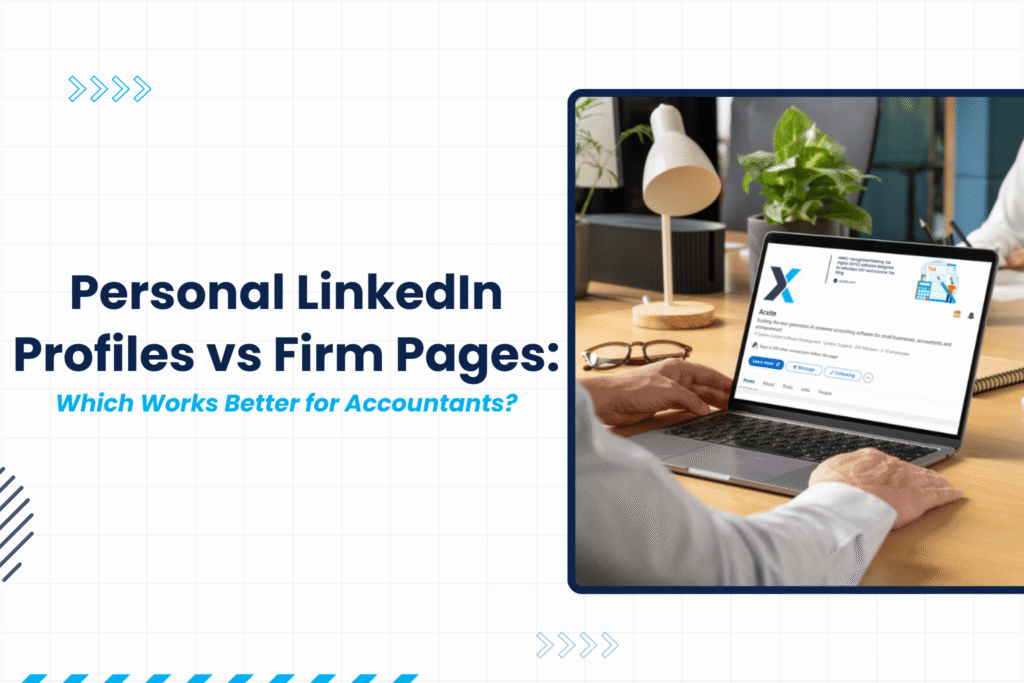
Many accounting firms rely only on firm pages because they feel safe and official. Others rely on personal profiles but post without structure or direction. Both approaches miss the point when used in isolation. LinkedIn delivers results only when you understand how people behave on the platform and how that behaviour aligns with actual client decision-making.
Personal LinkedIn Profiles Create Visibility and Trust
Stronger Reach and Engagement
LinkedIn promotes people rather than brands. Posts from personal profiles often reach more users than posts from firm pages. When you share a practical lesson from your client meeting or a clear opinion on a tax change, the post feels relevant to the readers. They will respond more and recognise you as a trusted person rather than a promotion.
Personal Content Builds Authority
Accounting firms often try to please everyone on LinkedIn with their generic content. However, the strongest profiles do the opposite: they identify a specific niche and interact with it through specialised content. When you post content that addresses a specific problem an e-commerce founder is struggling with, they will eventually engage with it.
Practical Profile Optimisation
A LinkedIn headline attracts more views than most firm websites. Yet many accountants treat it as an afterthought. A strong headline states clearly who you help and what problem you solve. It does not list qualifications. It guides the right audience to stay and read.
Personal profiles also allow direct interaction. Commenting on posts, responding to questions, and engaging within the first hour after posting all improve reach. These actions take minutes but deliver measurable visibility.
Firm Pages Provide Structure and Professional Assurance
Credibility And Consistency
Your firm page acts as a reference point on LinkedIn. When a reader sees a post from a personal profile, they often visit your official page to learn more about your business. A clear and up-to-date page helps you establish credibility by outlining your services, areas of compliance focus, team structure, and sector experience.
Your firm page may not attract high engagement, but it provides prospects with the information they need to assess whether your firm is the right fit.
Analytics And Campaign Control
Your personal profile does not offer access to LinkedIn analytics, but your firm page does. You can use that to track your follower growth, audience demographics, and engagement patterns. It allows you to understand which specific content your readers are looking for and which content is likely to land in your inbox.
You can also run paid ad campaigns on your firm’s pages. LinkedIn allows firm pages to promote specific services, test messaging, and measure interest, which you cannot do with a personal profile.
Support Not Replacement
Firm pages rarely drive conversation on their own. Corporate language limits comments and reduces interaction compared to personal posts. For this reason, firm pages should not act as the main channel for client engagement.
Instead, firm pages work best when they support activity from personal profiles. Personal posts attract attention and start discussions. Firm pages then provide reassurance by showing structure, consistency, and professional focus.
How Firms Can Achieve Better Results with a Combined Approach
Align Content with Your Firm’s Priorities
Effective LinkedIn activity starts with clarity. Accounting firms should define the type of clients they want and the problems they solve best. When your posts reflect these priorities, your content feels focused rather than scattered.
External links should be used carefully. LinkedIn often reduces reach when posts direct users away from the platform. Links should only appear when the content provides clear value. You can add a LinkedIn Premium custom button. It offers a more reliable way to guide prospects to newsletters, insights, or firm resources without affecting your visibility.
Move Conversations from Posts to Messages
Likes and impressions offer limited insight. Real value appears when someone comments on or engages with you repeatedly. A short, relevant message that references the interaction can open a professional conversation. Your focus should remain on understanding your reader’s needs rather than pushing your services.
Organise Posting Times and Formats
LinkedIn responds well to predictable posting patterns. Posting from Monday to Thursday, particularly in the morning, fits professional routines. Static posts with clear visuals often perform better than video posts at present. Portrait or square images also take up more space in the feed, which helps posts stand out. When you post through your firm page and share it with your personal profile, it builds trust and increases your visibility.
Wrapping Up
Accounting firms that work with personal profiles and firm pages often build a stronger presence that aligns with client expectations and professional standards. Personal LinkedIn profiles deliver stronger engagement and start meaningful client conversations when used with a structured strategy. Meanwhile, firm pages reinforce credibility and support consistent communication about services and compliance obligations.
LinkedIn visibility may bring enquiries, but strong internal systems determine whether your firm can deliver consistently. Acxite supports accounting firms with MTD ready workflows, accurate VAT filing, automated data extraction, and clear reporting. When engagement turns into leads, Acxite ensure your operations remain compliant, organised, and ready to scale.